How Long Do Dental Implants Last in Northern Virginia?
Dental implants in Northern Virginia typically last 20–30+ years with proper care. Learn what affects implant lifespan, how they compare to bridges and dentures, and how to protect your investment.
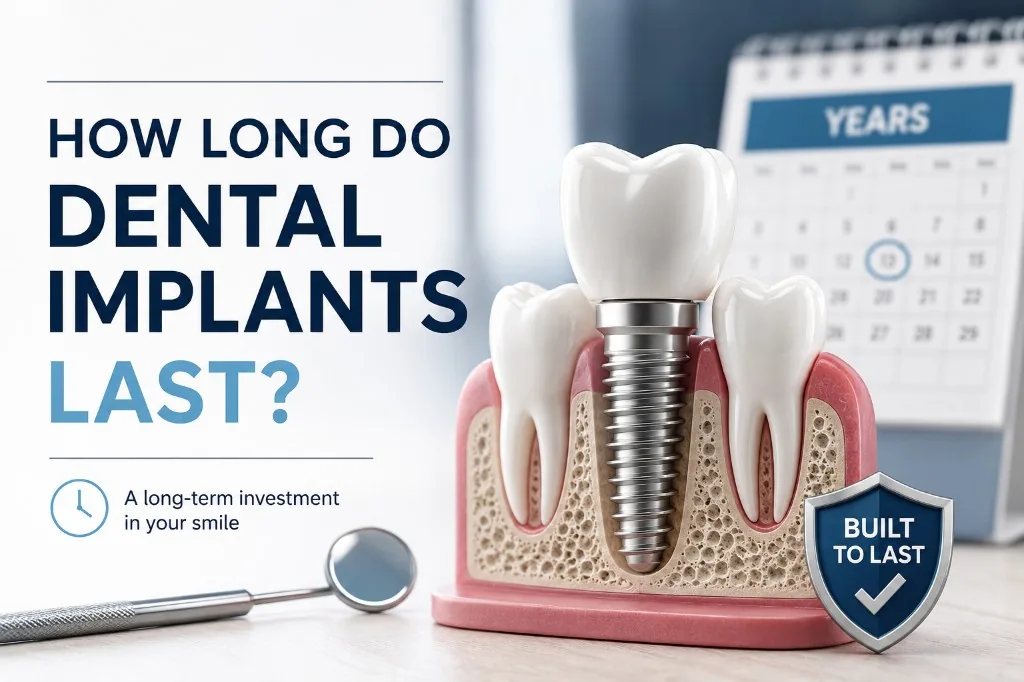
Dental implants in Northern Virginia typically last 20 to 30 years or longer with proper care — and the titanium post itself often lasts a lifetime. The crown on top may need replacement after 10–15 years due to normal wear, but the implant foundation beneath it stays integrated with the jawbone. How long your implant lasts depends on oral hygiene, bone health, grinding habits, and regular dental checkups.
How long do dental implants last?
The implant post — the titanium screw placed in the jawbone — is designed to be permanent. Once osseointegration is complete (the bone fuses with the implant), the post becomes a stable part of your jaw. Clinical studies report implant survival rates above 95% at 10 years and above 90% at 20 years for patients who maintain good oral hygiene.
The crown, abutment, or other visible restoration on top of the implant may wear out sooner. Crowns typically last 10–15 years before chipping, cracking, or discoloration requires replacement. Replacing a crown on an existing implant is straightforward and far less involved than the original surgery.
At Hedgewood Dental in Woodbridge, VA, Dr. Christine Mai uses FDA-approved implant systems from established manufacturers and monitors implant health at every routine checkup.
What affects implant lifespan in Northern Virginia?
Oral hygiene is the single biggest factor. Brushing twice daily, flossing around the implant (or using a water flosser), and professional cleanings every six months prevent peri-implantitis — the implant equivalent of gum disease that can cause bone loss around the post.
Bone quality and quantity at the time of placement matter. Patients who needed bone grafting before implant placement may have slightly different long-term outcomes, which is why 3D imaging and careful planning are essential before surgery.
Teeth grinding (bruxism) puts excessive force on implants and crowns. A custom night guard protects both natural teeth and implant restorations from premature wear.
Smoking significantly reduces implant success rates. Smokers face roughly double the risk of implant failure compared to non-smokers because nicotine restricts blood flow to the gums and bone.
Systemic health conditions — uncontrolled diabetes, autoimmune disorders, and certain medications — can affect how well bone integrates with the implant. Managing these conditions with your physician improves long-term outcomes.
Implants vs bridges vs dentures — which lasts longest?
Dental implants last the longest of all tooth replacement options. The titanium post integrates permanently with the jawbone and does not depend on neighboring teeth for support.
Traditional dental bridges typically last 10–15 years. The supporting teeth bear extra stress, and decay or gum disease around those teeth can shorten bridge lifespan.
Removable partial dentures usually last 5–10 years before the acrylic base warps, clasps loosen, or the fit changes due to bone shrinkage underneath.
Full conventional dentures last 5–8 years on average before needing relining or replacement. Implant-supported dentures (All-on-4 or overdentures) are far more stable and the implants themselves last decades, though the denture portion still needs periodic maintenance.
When you calculate cost over 20 years, implants often become the most economical choice because they rarely need full replacement.
How to make your dental implant last 25+ years
Treat your implant like a natural tooth: brush twice daily, floss daily, and use an antimicrobial mouth rinse if your dentist recommends it.
Keep every six-month cleaning and exam appointment. Dr. Mai checks implant stability, gum health around the post, and crown condition at each visit.
Wear a night guard if you grind or clench your teeth. Grinding is one of the most common preventable causes of early crown failure on implants.
Avoid chewing ice, hard candy, or using your teeth to open packages. Implants are strong, but the crown material can chip under extreme force.
Address gum inflammation early. Red, swollen, or bleeding gums around an implant should be evaluated promptly — early peri-implantitis is treatable; advanced bone loss around an implant may require surgical intervention.
If you smoke, quitting before and after implant placement dramatically improves long-term success rates.
Dental implant care at Hedgewood Dental in Woodbridge
Hedgewood Dental serves patients across Northern Virginia — Woodbridge, Dale City, Lake Ridge, Lorton, Dumfries, and surrounding Prince William County communities. Dr. Christine Mai has planned and restored implant cases since 1997 and coordinates with local specialists when surgical placement is needed.
Every implant patient receives a written care plan covering the healing timeline, hygiene instructions, and follow-up schedule. For details on the procedure itself, see our dental implant procedure timeline guide. For pricing, see our 2026 dental implant cost guide for Woodbridge.
Frequently asked questions
Do dental implants come with a warranty?
Many implant manufacturers offer warranties on the titanium post — typically 10 years to lifetime depending on the brand. Crown warranties vary by lab and material. Ask your dentist about specific warranty coverage at your consultation.
What are signs that a dental implant is failing?
Warning signs include persistent pain or swelling around the implant, the implant feeling loose, gum recession exposing the metal post, or pus/discharge near the implant site. Contact your dentist immediately if you notice any of these symptoms.
When do you replace the crown vs the entire implant?
The crown is replaced when it chips, cracks, or wears down — typically every 10–15 years. The entire implant post is only removed if it fails to integrate, develops severe peri-implantitis, or fractures. Full implant replacement is uncommon when the implant is well-maintained.
Do dental implants last longer than natural teeth?
A well-maintained implant can outlast a heavily restored natural tooth. However, natural teeth with no decay or gum disease can also last a lifetime. Implants are most valuable when the natural tooth is already lost or cannot be saved.
How often should I get my dental implant checked?
Every six months at your routine cleaning and exam. Your dentist checks implant stability, gum health, bite alignment, and crown condition at each visit.
Dental implants are built to last decades — often a lifetime — when you care for them properly. If you are considering a tooth implant in Northern Virginia, the first step is a consultation with 3D imaging to assess your bone health and set realistic expectations. Call Hedgewood Dental in Woodbridge, VA to schedule an implant evaluation with Dr. Christine Mai.
Request an AppointmentRequest an Appointment
Share a few details—our team will follow up to confirm next steps.